
Why Did the Bee Swarm Land on My Car? |
What a honey bee swarm on your vehicle means, what not to do and when to call a beekeeper |
Why Did the Bee Swarm Land on My Car?
Walking out to your driveway and finding thousands of honey bees clustered on your car can be startling.
The good news is that a swarm resting on a vehicle is usually temporary, and the bees are not trying to turn your car into a permanent hive.
A swarm is part of the natural reproductive cycle of a honey bee colony.
When a colony becomes large enough to divide, the old queen leaves the original hive with a large group of worker bees.
Those bees gather into a cluster while scout bees search the surrounding area for a suitable new home.
Your car may simply have become a convenient place for the swarm to stop and wait.
Why a Car?
Honey bee swarms do not need much to choose a temporary resting place.
A mirror, windshield wiper, roof rack, antenna, open truck bed, wheel well, bumper or even the side of the vehicle can provide enough structure for the bees to gather around their queen.
The location does not necessarily mean the bees are attracted to the make, color or smell of the vehicle.
Often it is simply the place where the queen stopped during the swarm’s flight.
Once she settles, the other bees gather around her and form the familiar ball or blanket of bees that people associate with a swarm.
Are the Bees Trying to Build a Hive in My Car?
Usually, no.
A newly landed swarm has not yet established a permanent nest.
The bees generally have no comb, brood or stored honey at the temporary resting site.
Scout bees leave the cluster and inspect possible nesting cavities nearby.
If the scouts find an acceptable location, the swarm may suddenly lift off and leave together.
That can happen within a few hours, although some swarms may remain in place longer.
The situation becomes different if bees begin moving repeatedly into an enclosed part of the vehicle or another cavity and start establishing comb.
At that point, professional removal becomes more important.
Are Swarming Bees Dangerous?
A honey bee swarm can look frightening because there may be thousands or tens of thousands of bees in one visible cluster.
However, a resting swarm is often less defensive than an established colony because it does not have brood and stored honey at that temporary location to defend.
That does not mean the bees cannot sting.
Any honey bee can sting when disturbed, squeezed or threatened.
The safest approach is to give the swarm room and avoid unnecessary contact.
Children, pets and anyone with a known severe allergy to bee stings should be kept well away from the vehicle until the bees are gone or have been removed.
Do Not Spray the Swarm
One of the worst reactions is to immediately grab insecticide, a garden hose or another household chemical.
Spraying a clustered swarm can agitate the bees and turn a calm situation into a dangerous one.
It can also kill a healthy honey bee colony that could have been relocated by a beekeeper.
Do not swat at the bees, throw objects at the cluster, bang on the vehicle or intentionally shake the swarm.
Those actions increase the chance of defensive behavior.
Should I Just Drive Away?
Driving a vehicle covered with a swarm is not a good idea.
The movement and vibration can disturb the cluster, and bees may enter the passenger compartment through open windows, vents or other openings.
It also creates a hazard if bees begin flying around the driver or other motorists.
If possible, leave the vehicle parked and keep a reasonable distance until the swarm departs naturally or a beekeeper removes it.
Will the Swarm Leave on Its Own?
It might.
A swarm cluster is often a temporary staging point while scouts search for a permanent cavity.
Once the colony agrees on a new location, thousands of bees can take flight within a very short period of time.
A car that appeared completely covered in bees can suddenly be empty.
There is no guarantee, however, that the swarm will leave quickly.
If the car is needed soon, the swarm is in a busy public area, someone nearby has a severe allergy, or the bees have moved into a cavity, calling a beekeeper is the better option.
What Will a Beekeeper Do?
An experienced beekeeper will first determine whether the bees are truly a temporary swarm or an established colony.
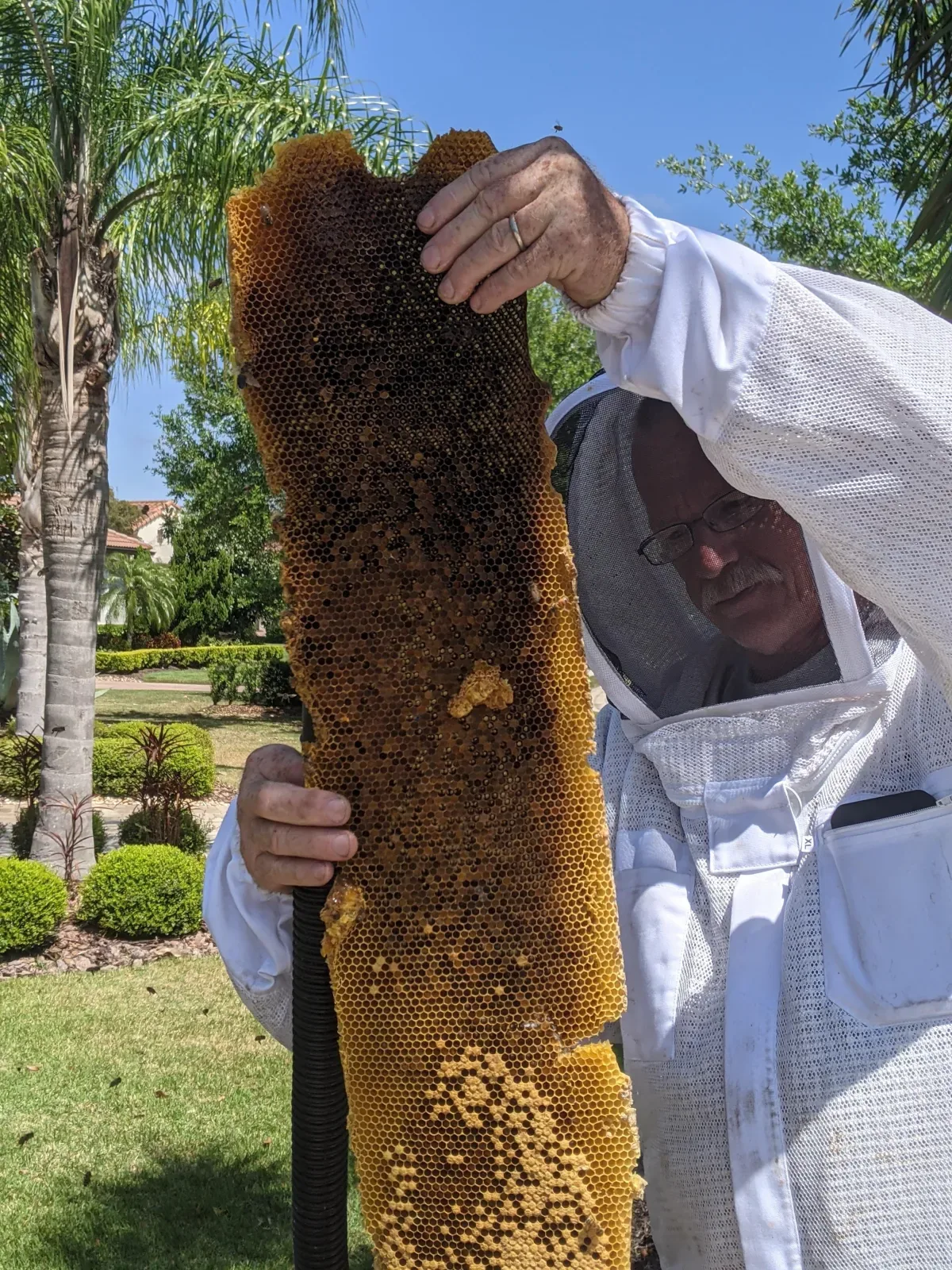
If the swarm is clustered on an accessible part of the vehicle, the beekeeper may be able to gently collect the bees into a hive box or other suitable container.
The key is getting the queen into the container.
When the queen is inside, the remaining workers often begin moving toward her.
After the bees settle, the colony can be relocated to an apiary and managed as a normal honey bee colony.
What looked like a major problem in the driveway can become a productive hive in a beekeeper’s yard.
Why Did the Swarm Stop There in the First Place?
The queen is the center of the swarm cluster, but she is not necessarily choosing the colony’s final home.
During swarming, the queen leaves with thousands of workers and may land on the first suitable object after a flight from the parent colony.
The workers surround her while scout bees investigate potential nest sites.
A car parked near trees, homes, fences or other structures may simply happen to be along the swarm’s route.
This is why swarms can appear on some unusual objects.
Beekeepers have found swarms on mailboxes, shopping carts, bicycles, fence posts, patio furniture, traffic signs and many other temporary resting places.
Can I Prevent Bees From Landing on My Car Again?
There is usually very little a homeowner can do to prevent a passing swarm from temporarily landing on a vehicle.
The event is often random and may never happen at that location again.
If swarms repeatedly appear in the same area, however, there may be managed or feral colonies nearby that are producing swarms.
There could also be a suitable nesting cavity nearby that attracts scout bees.
A beekeeper can sometimes help identify whether repeated swarm activity suggests a colony or nesting site in the immediate area.
What If the Bees Go Inside the Car?
If a few individual bees enter an open vehicle, close access points when it is safe to do so and avoid trapping yourself inside with agitated bees.
If a large number of bees are entering the dashboard, body panels, engine compartment or another enclosed cavity, do not start dismantling the vehicle unless you have experience handling honey bees.
An established colony in a confined space can be much more defensive than a temporary swarm sitting on the outside of the car.
Contact an experienced beekeeper or appropriate bee-removal professional.
What Should I Do Right Now?
If you discover a honey bee swarm on your car, keep the response simple.
Do not spray it.
Do not swat at the bees.
Do not shake or strike the vehicle.
Do not attempt to drive with a large swarm attached.
Keep children and pets away.
Give the bees space.
Watch from a safe distance to see whether the swarm departs naturally.
If the swarm remains, is creating a safety problem or has moved into a cavity, contact a beekeeper who handles swarm removal.
A Swarm Is Usually a Temporary Visitor
Finding your car covered with honey bees can make for an unforgettable morning, but it usually does not mean your vehicle has suddenly become a permanent beehive.
The swarm is most likely resting while scout bees search for a permanent home.
With patience and a little distance, the bees may leave by themselves.
If they do not, an experienced beekeeper may be able to safely collect the swarm and give the colony a new home.
Willhoite Farms, LLC encourages people who encounter a swarm to treat it as a living honey bee colony rather than an insect problem that must automatically be destroyed.
A calm response protects both the people nearby and the bees themselves. |
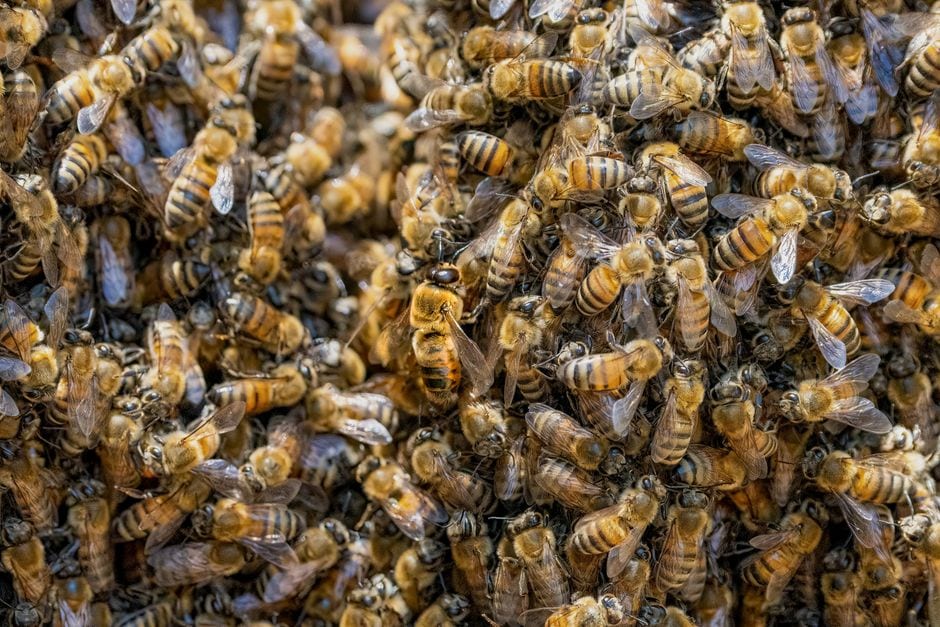 A honey bee swarm may rest temporarily while scout bees search for a permanent home. Photo by chris clark on Pexels |
0 Comments
Join the conversation
Be the first to comment
Share your thoughts above.