The Willhoite Bee Journal — First Issue
Honey-bee swarms, professional relocation, queen breeding, and notes from the apiary.

B.Stiles
The Willhoite Bee Journal |
Welcome to the first issue of The Willhoite Bee Journal. A practical look at honey bees, colony behavior, professional relocation, queen breeding, and lessons from the apiary. The goal is straightforward: explain what bees are doing, why they do it, and what responsible beekeeping looks like in the field. |
A swarm on a car, fence, tree limb, mailbox, or porch can look alarming, but it is usually a colony in transit. When a honey-bee colony reproduces by swarming, the old queen leaves the original hive with thousands of workers. The bees gather temporarily around the queen while scout bees search the surrounding area for a suitable permanent cavity. A vehicle can simply be a convenient resting place. Warm surfaces, sheltered seams, mirrors, wheel wells, and other protected spots may give a traveling swarm somewhere to cluster. Their presence does not necessarily mean they intend to build a colony there. The safest response is to give the swarm space and contact an experienced beekeeper or bee-removal professional. A clustered swarm can often be collected and relocated into managed equipment, where the colony has a better chance to establish itself safely. |
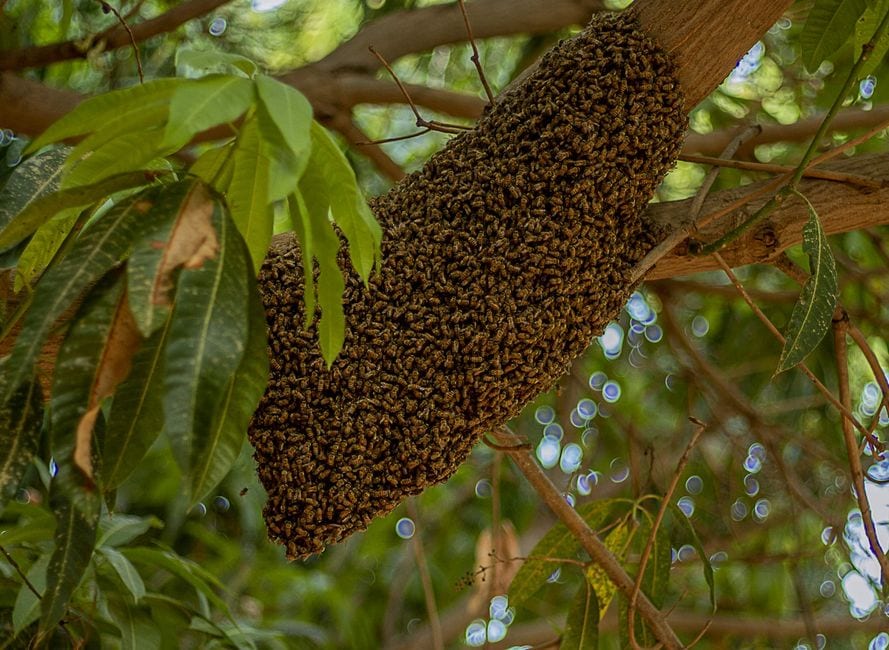 A honey-bee swarm clustered together while the colony is between homes. Photo by Ahmad salisu jaafar on Pexels |
Honey-bee relocation is more than removing the bees that can be seen. When a colony is established inside a wall, soffit, tree cavity, or other structure, the beekeeper first evaluates where the bees are entering and where the brood nest and comb are likely located. The goal is to remove the colony while preserving as many bees as practical and preventing the site from attracting another swarm. In an accessible cut-out, comb containing brood can be carefully removed and secured into hive frames. Adult bees are collected, and locating or capturing the queen greatly improves the chances that the workers will settle into the new hive. Honey and old comb should also be removed from a structure because abandoned material can attract pests and future colonies. After relocation, the colony is monitored in its new equipment. Good relocation work considers both sides of the job: the health of the bees and the condition of the property they occupied. |
Queen breeding is one of the places where practical beekeeping meets genetics. Beekeepers may select breeding stock for traits such as productivity, temperament, overwintering ability, hygienic behavior, and performance under local conditions. Natural mating gives a queen access to multiple drones in flight, but it gives the breeder limited control over exactly which drones contribute genetics. Instrumental insemination changes that. Using specialized equipment and carefully selected drones, a trained breeder can control the paternal genetics used to inseminate a virgin queen. That control makes the technique valuable in research and breeding programs where known parentage matters. The procedure requires specialized training, precise handling, healthy queens and drones, and careful follow-up colony management. It is not necessary for ordinary apiary management, but it is an important tool for breeders working to maintain or develop particular honey-bee lines. |
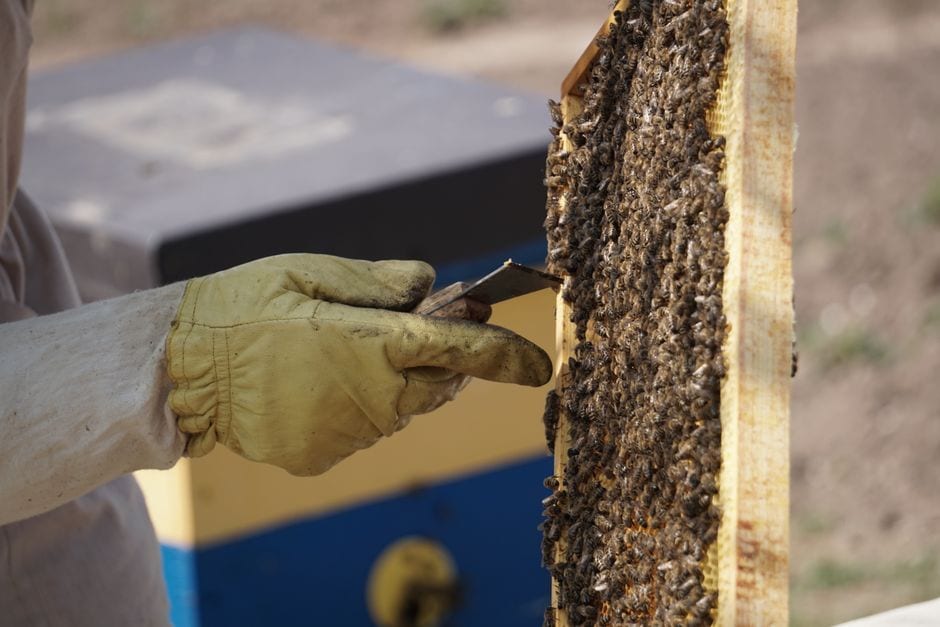 A beekeeper working with a frame covered in honey bees. Photo by Dmytro Glazunov on Pexels |
Field note: When you see a swarm, watch before you act. A newly clustered swarm is often waiting while scouts search for a home. Keep people and pets at a sensible distance, avoid spraying or disturbing the cluster, and give an experienced beekeeper a chance to assess it. What looks like a bee emergency can often become a successful colony relocation. |
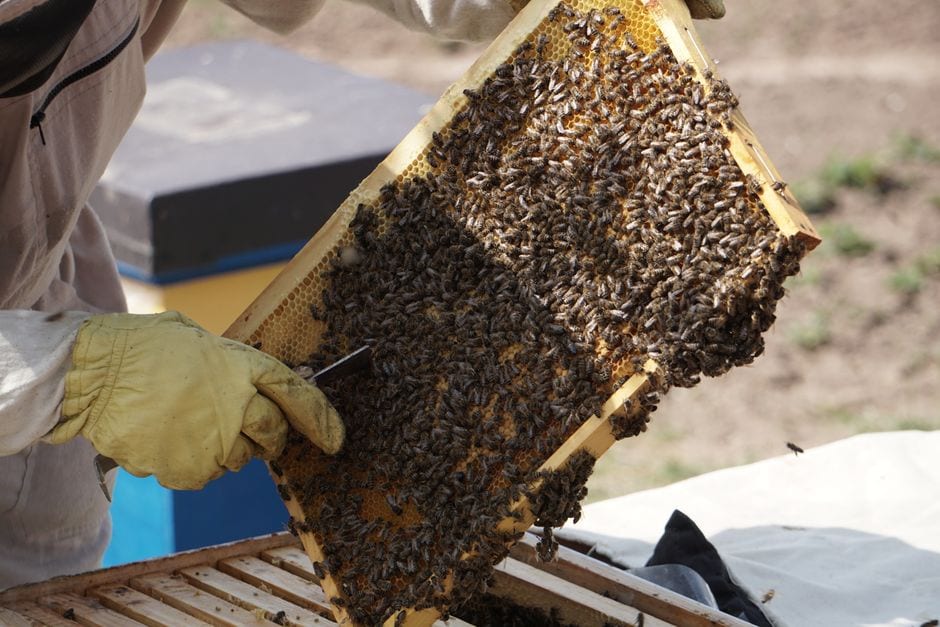 A close look at honey bees on a hive frame, where breeders evaluate colony performance and traits. Photo by Dmytro Glazunov on Pexels |